Active Adult Communities
Cost of Living
Retirement Communities


Moving to a new state for retirement can open the door to a different lifestyle, new friendships, and opportunities to enjoy the years ahead. Whether you're considering the Carolinas, Florida, Georgia, Tennessee, Virginia, or another destination, choosing where to live deserves careful research.
Many people begin their search by comparing tax-friendly retirement states, housing prices, and nearby hospitals. These are important factors, but they don't tell the complete story.
Successful U.S. retirement relocation planning requires looking beyond financial rankings to understand how a destination will support your everyday life, personal priorities, and long-term needs.
This guide outlines 12 essential considerations to review before moving, along with research resources, a practical checklist, and questions to ask during community visits.
Before choosing a retirement destination, evaluate these key factors:
The best place to retire isn't necessarily the state with the lowest taxes or the most favorable ranking. It's the place that fits your lifestyle, finances, healthcare needs, and personal priorities.
Taxes are often among the first considerations when researching retirement destinations.
However, a state without an individual income tax may still have significant property taxes, insurance expenses, sales taxes, or other costs.
Research:
Use the Tax Foundation and official state revenue department websites to understand current tax policies.
Because individual circumstances differ, consult a qualified tax professional before making decisions based on potential savings.
For additional guidance, explore our guide to tax-friendly retirement states for 55+ living.
Access to quality healthcare is essential when choosing where to retire.
But simply finding a hospital nearby isn't enough.
Consider:
Use Medicare Care Compare to research participating healthcare facilities and providers.
Confirm insurance coverage and provider availability directly before relocating.
A lower home purchase price doesn't always translate into a less expensive retirement.
Compare annual expenses across potential destinations.
| Expense | What to verify |
|---|---|
| Housing | Purchase price, mortgage, or rental expenses |
| Property taxes | Expected taxes after purchase |
| Homeowners insurance | Property-specific premiums and deductibles |
| HOA fees | Regular dues and potential special assessments |
| Utilities | Electricity, water, internet, and heating or cooling |
| Transportation | Vehicle expenses, fuel, and local transportation |
| Healthcare | Premiums, copays, and out-of-pocket costs |
| Maintenance | Landscaping, repairs, and property upkeep |
| Recreation | Memberships, activities, and entertainment |
Retirement planning tip: Compare annual ownership and living costs rather than relying only on housing prices or state rankings.
Retirement is an opportunity to spend more time doing the things you enjoy.
Think about how you want your typical week to look.
Would you prefer:
A destination that looks appealing in photographs may not necessarily offer the everyday lifestyle you want.
| Community type | Potential advantages | What to investigate |
|---|---|---|
| 55+ active adult community | Social activities and age-focused amenities | Age restrictions, HOA fees, and available services |
| Master-planned community | Recreational amenities and neighborhood design | Membership requirements and community rules |
| Traditional neighborhood | Variety of residents and housing options | Access to services and social opportunities |
| Coastal community | Beaches, boating, and waterfront recreation | Weather exposure, insurance, and seasonal traffic |
| Mountain community | Scenic surroundings and outdoor activities | Terrain, winter access, and nearby services |
Explore ideal-LIVING to discover destinations and communities that align with your preferred lifestyle.
The home you choose for retirement should fit your current lifestyle while remaining practical as your needs change.
Consider:
You may be active and independent today, but planning for long-term convenience can make your home more comfortable for years to come.
Aging in place doesn't necessarily require a specialized community. It means considering whether your home and neighborhood can continue supporting your needs over time.
Climate is often a major motivation for retirement relocation.
However, average temperatures don't fully describe the experience of living in a destination year-round.
Research:
For example, coastal and mountain communities may offer very different experiences depending on the season.
Use resources such as NOAA and FEMA's Flood Map Service Center to research relevant conditions.
Moving to a beautiful destination may feel exciting, but distance from family can become more important over time.
Consider:
If spending time with grandchildren or maintaining established friendships is a priority, include travel convenience in your relocation decision.
A retirement community may have attractive homes and amenities but still require driving for nearly every errand.
Research whether you can conveniently reach:
Also investigate transportation options for situations when driving may be less convenient.
A walkable community can support an active lifestyle, but the quality and connectivity of sidewalks matter more than marketing descriptions.
One of the most overlooked aspects of retirement relocation is building a new social network.
Moving away from familiar surroundings means establishing new routines and relationships.
Look for communities offering:
During a community visit, ask residents about the social atmosphere and how newcomers become involved.
A strong sense of community can be just as important as attractive amenities.
Everyday convenience becomes increasingly important when you're living somewhere full-time rather than visiting on vacation.
Investigate:
For destinations with significant seasonal populations, ask whether businesses and services remain available throughout the year.
Many retirement and lifestyle communities have homeowners associations.
Before purchasing a home, request and review the governing documents.
Pay particular attention to:
A community's amenities may be attractive, but its rules and financial obligations should also match your expectations.
Online research is a valuable starting point, but an in-person visit can reveal details that websites cannot.
During a discovery visit:
If practical, return during another season to better understand the destination's year-round lifestyle.
A discovery visit can help turn an attractive possibility into an informed decision.
The most useful retirement relocation research combines several types of resources.
| Resource | Best for |
|---|---|
| ideal-LIVING | Retirement destinations, lifestyle communities, and relocation planning |
| Livability | Comparing American cities, towns, and quality-of-life considerations |
| 55places | Researching 55+ and active adult communities |
| Kiplinger | Retirement finances and tax considerations |
| Tax Foundation | State and local tax research |
| Medicare Care Compare | Healthcare provider and facility research |
| U.S. Census Bureau | Regional population and demographic information |
No single resource can determine the best retirement destination for every person.
Use these sources together to build a more complete picture of each location.
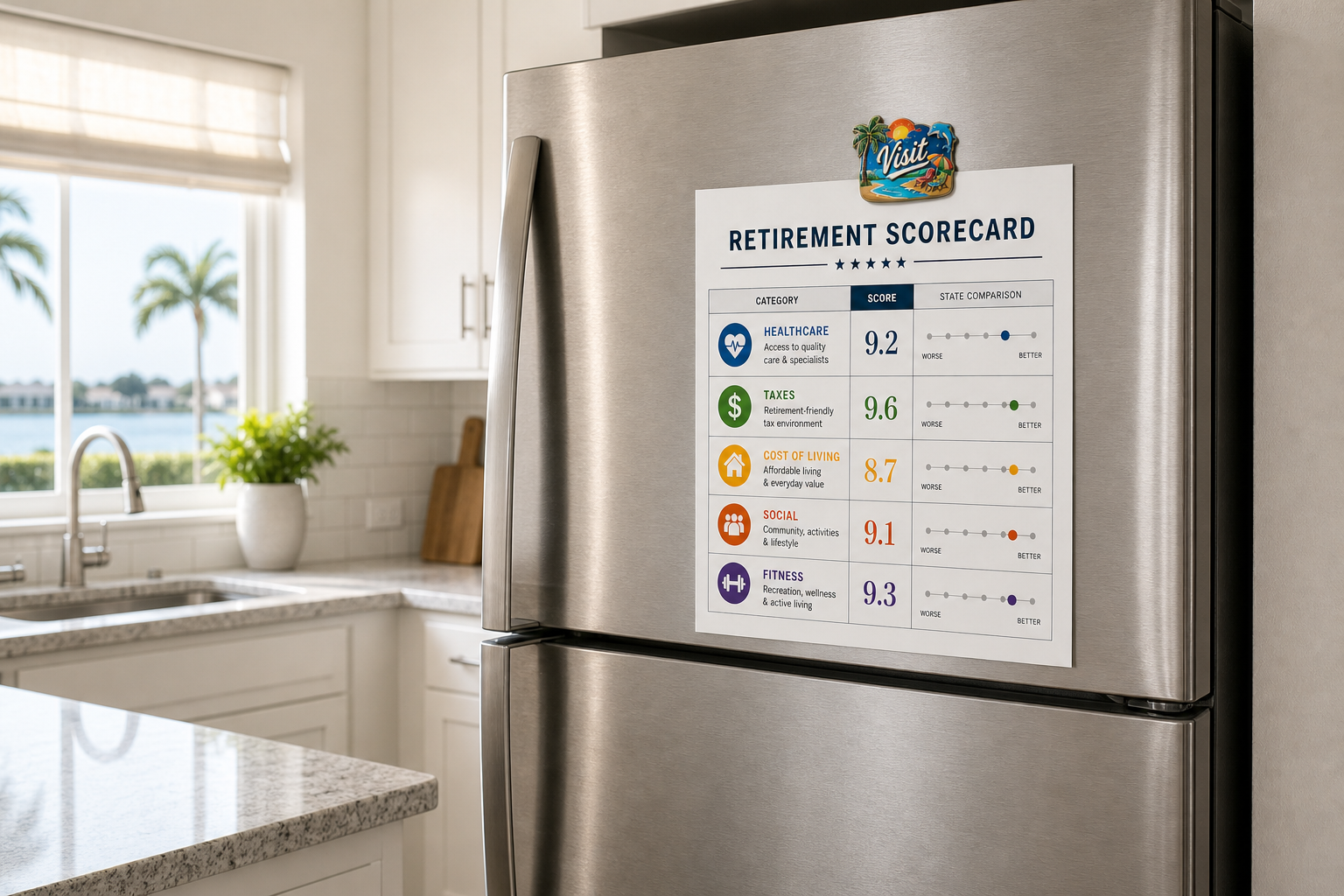
For a structured comparison, see our Retirement Relocation Scorecard Guide for 2026.
Before making a final decision, confirm that you've completed the following:
Use this checklist alongside a relocation scorecard to compare destinations consistently.
ideal-LIVING offers resources for exploring retirement destinations and lifestyle communities. Kiplinger and the Tax Foundation provide financial and tax information, while Medicare Care Compare helps research healthcare facilities and providers. Combining these resources allows retirees to compare taxes, healthcare access, and community options.
Research state and local taxes, healthcare access, housing costs, insurance, climate, community amenities, transportation, proximity to family, and everyday services. Also evaluate long-term housing suitability and visit potential communities before making a decision.
No. A state with favorable income tax treatment may have higher housing, insurance, property tax, or other living expenses. Compare the complete financial picture alongside healthcare access and lifestyle priorities.
Use a structured relocation scorecard to evaluate healthcare, taxes, housing costs, amenities, walkability, climate, social opportunities, and proximity to family. Verify important information directly with community representatives and local authorities.
Social connections and everyday convenience are often overlooked. Beyond housing and taxes, consider opportunities to build friendships, participate in activities, access essential services, and maintain relationships with family.
Yes. Visiting allows you to tour homes, evaluate amenities, explore surrounding services, and experience the community atmosphere. When possible, visit at different times or seasons to understand daily living conditions.
Retirement relocation is about more than finding a beautiful home or a state with favorable taxes. It's about discovering a destination that supports your health, finances, relationships, interests, and long-term happiness.
With thoughtful research and firsthand community visits, you can make a more confident decision about where to begin your next chapter.
For more than 30 years, ideal-LIVING has helped people discover destinations and explore communities that match the lifestyle they envision.
Explore retirement-friendly destinations, compare lifestyle communities, and discover valuable resources for planning your move.
Your Digital Relocation Guide will be delivered by email, and your ideal-LIVING Magazine will be mailed to your address.