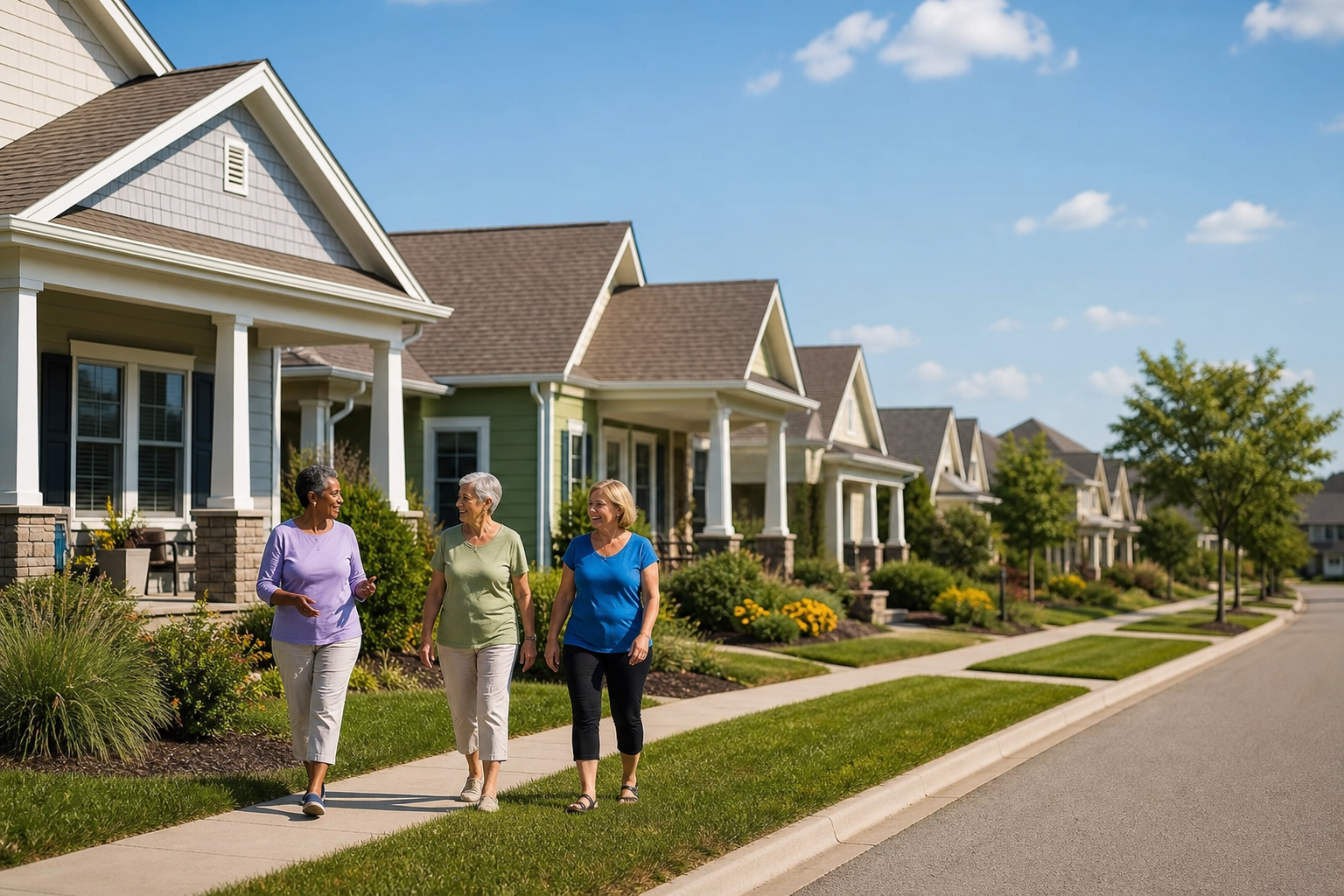
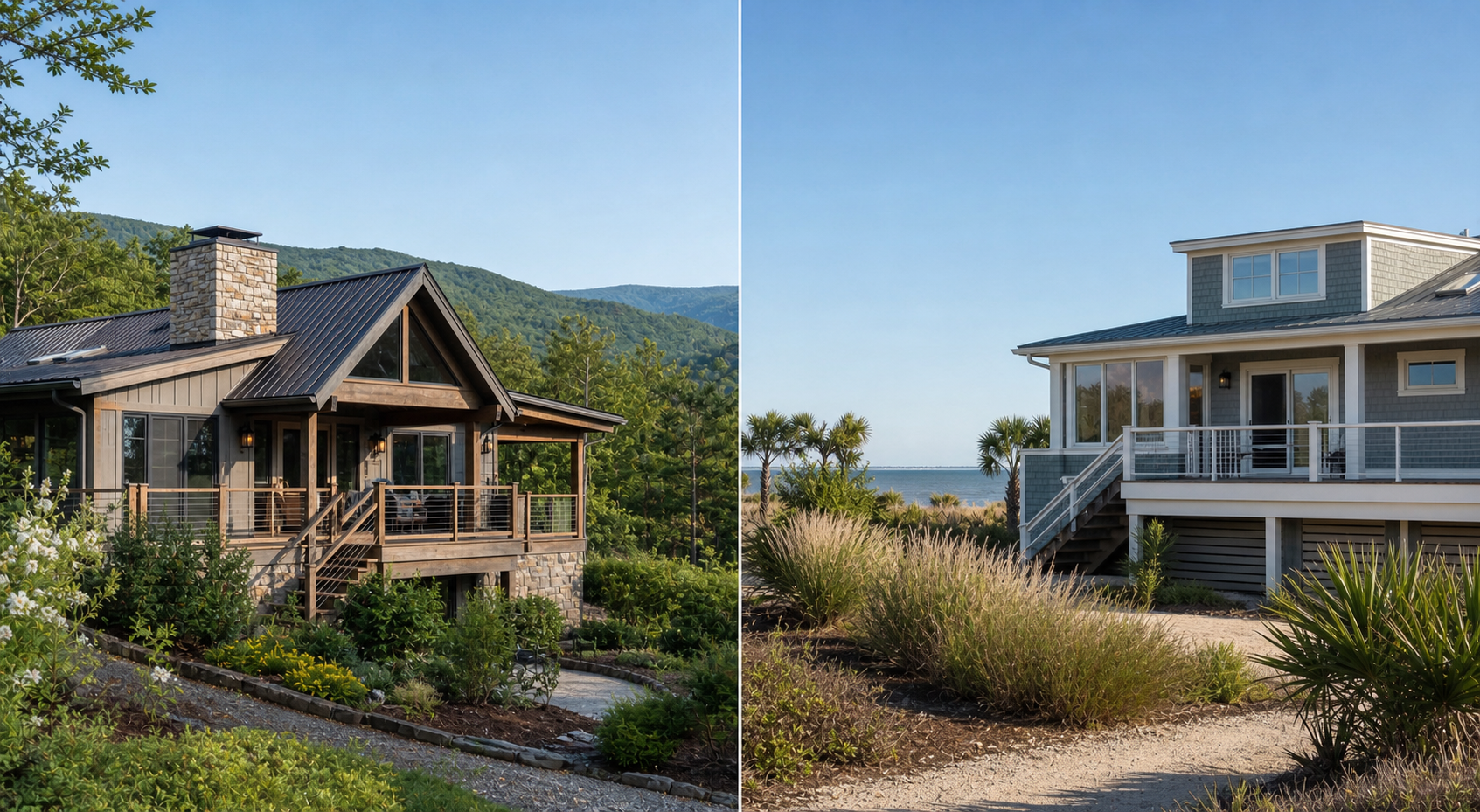
For many people planning a move, retirement, or second home, the search eventually comes down to a lifestyle question: Would I rather live near the coast or in the mountains?
Both offer natural beauty, outdoor recreation, distinctive communities, and a change of pace. But choosing between coastal and mountain living involves more than deciding which view you prefer.
Climate, accessibility, home maintenance, insurance, healthcare, recreation, travel, remote work needs, and the type of community you want around you can all influence which setting feels right long after the novelty of the scenery wears off.
Here’s how to compare the two.
Coastal vs. Mountain Living: What’s the Biggest Difference?
The biggest difference is often how you want your everyday life to feel.
Coastal living tends to revolve around water, beaches, boating, outdoor dining, golf, and communities designed around a more relaxed coastal lifestyle.
Mountain living often emphasizes privacy, scenery, hiking, changing seasons, outdoor adventure, and a stronger sense of retreat.
Neither is inherently better. The better choice is the one that fits the life you expect to live every day—not simply where you enjoy vacationing.
Coastal Living May Be Right for You If...
You picture yourself spending more time outdoors near the water. Walking the beach, boating, kayaking, fishing, golf, and mild winters may matter more to you than experiencing four distinct seasons.
Coastal destinations can also offer a wide range of choices. Living near the coast does not necessarily mean owning an oceanfront home. Buyers can consider homes along rivers, sounds, Intracoastal waterways, marshes, or communities located a short drive from the beach.
Before buying, however, research factors such as storm exposure, flood zones, homeowners insurance, salt-air maintenance, seasonal traffic, and evacuation routes.
Explore: Coastal Communities
Mountain Living May Be Right for You If...
You would rather wake up to wooded surroundings, long-range views and a quieter connection to nature.
Mountain destinations can appeal to people looking for hiking, biking, lakes, golf, cooler summer temperatures, privacy and four-season scenery. They can also provide an appealing alternative for buyers who want access to outdoor recreation without living in a major resort or coastal destination.
The practical questions are different, though. Consider road access, elevation, winter weather, distance to healthcare and airports, internet availability, property maintenance, and travel time to everyday services.
Explore: Mountain Communities
Coastal vs. Mountain Living: What Should You Compare?
Don't compare destinations on scenery alone. Compare how each location works for your actual lifestyle.
| Consideration |
Coastal Living |
Mountain Living |
| Climate |
Often milder winters; hot and humid summers in many Southern destinations |
Cooler summers in many locations; colder winters and greater seasonal change |
| Outdoor Lifestyle |
Beaches, boating, fishing, kayaking, golf |
Hiking, biking, lakes, golf, skiing in some regions |
| Home Considerations |
Flood exposure, wind, insurance, salt-air maintenance |
Elevation, slopes, winter access, drainage and road conditions |
| Accessibility |
Varies widely; many destinations are near growing coastal cities |
Some communities are close to cities; others can be more remote |
| Healthcare |
Research proximity to hospitals and specialists |
Especially important to evaluate in more rural mountain areas |
| Remote Work |
Verify internet reliability, particularly in less-developed coastal areas |
Broadband and cellular coverage can vary considerably by location |
| Lifestyle Feel |
Social, water-oriented and often resort influenced |
Nature-oriented, scenic and often quieter |
| Seasonality |
Tourism and seasonal traffic can affect some areas |
Seasonal visitors and winter conditions can affect some destinations |
What About Remote Work?
For remote workers, location flexibility makes lifestyle more important—but connectivity more important too.
Before choosing either setting, verify broadband options at the specific property or community, not simply the surrounding town. Also consider cellular coverage, airport access and how frequently you will need to travel for work.
A beautiful setting loses some of its appeal if every video meeting becomes a connectivity problem.
What If You Want Both?
You may not have to choose.
Some of the most interesting relocation destinations combine elements of both lifestyles. The Carolinas, Tennessee, Virginia and other parts of the Southeast offer access to mountains, lakes, rivers and coastal destinations within the same broader region.
You may also discover that what you really want isn't "the beach" or "the mountains." You want water access, views, outdoor recreation, mild weather, walkability or privacy.
That distinction can dramatically expand your search.
Instead of asking, Where should I move?, try asking:
What do I want my normal Tuesday to look like?
That question often reveals more about your ideal destination than a list of popular places ever could.
How Should You Research Coastal and Mountain Communities?
Start broadly, then narrow your options based on the factors that affect everyday life.
Compare climate, taxes, cost of living, healthcare, home prices, insurance, amenities, accessibility and proximity to family. Then look at individual communities within the destinations that meet your priorities.
Relocation websites can be especially useful during this stage because they allow you to move beyond individual home listings and research the destination, community and lifestyle together.
At ideal-LIVING, you can search communities by lifestyle and amenities, including coastal, mountain, waterfront, golf, 55+, active adult and other community types.
The Best Way to Decide? Experience Both.
Online research can narrow your choices, but visiting a destination can tell you what a spreadsheet cannot.
Spend enough time there to experience ordinary life. Drive to the grocery store. Explore nearby towns. Visit the community amenities. Check the route to healthcare. Talk with residents. See what the area feels like in the morning and at night.
Most importantly, ask yourself whether you can picture living there after the vacation feeling disappears.
Ready to Compare Your Options?
Your ideal place isn't defined by a ranking. It's the place that fits the lifestyle you want to live next.
Explore Coastal Communities or Explore Mountain Communities to begin comparing destinations and communities.
Still narrowing down what matters most? Explore the Best Places to Live or use ideal-LIVING's community search to compare locations, amenities and lifestyle options before planning your next visit.